
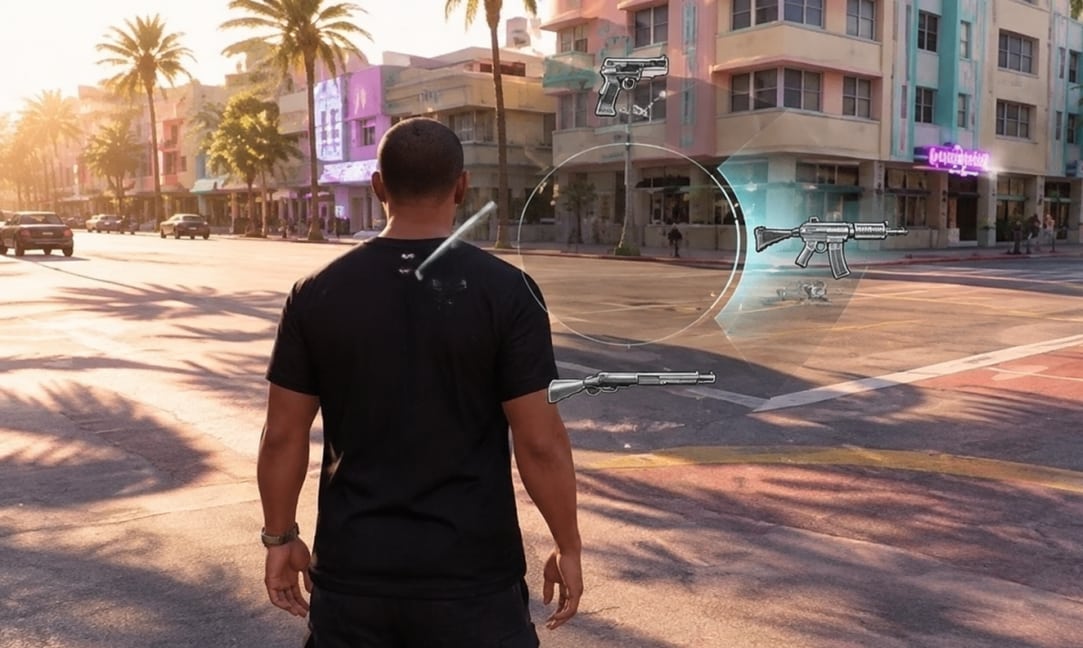
A weapon switch should answer a clear combat problem. An enemy moving through a doorway, a shooter across an open street, and a target on a distant rooftop each demand a different response. Changing guns without considering distance, cover, ammunition, and escape routes can leave you exposed at the worst moment.
For players researching GTA 6 Accounts, it is worth separating account-related claims from confirmed gameplay information. GTA 6 has not released a complete public weapons list or a final control guide, so no responsible guide can confirm every weapon type, statistic, switching speed, or combat feature. The advice below focuses on reliable combat principles that can be applied once the final arsenal and controls are available.
The central rule is simple: select a weapon for the next threat, not for the fight you handled a few seconds earlier. A powerful gun is still a poor choice if the target is outside its practical range, the ammunition is nearly empty, or changing to it leaves you standing in an exposed position.
What to Check Before Switching Weapons
A quick assessment helps prevent unnecessary input. Before changing equipment, check four conditions:
- Enemy distance: Is the target close enough to pressure you immediately?
- Cover: Can you switch while protected, or are you exposed to several firing lanes?
- Ammunition: Is the current weapon empty, nearly empty, or still ready for another exchange?
- Movement: Are you holding a position, pushing forward, or trying to escape?
These questions take less time than repeatedly cycling through weapons without a plan. They also make the decision easier when several opponents are present.
Switch for a Specific Reason
A weapon change usually makes sense when:
- The current weapon is empty and an enemy is closing in.
- The target is too far away for accurate fire with the gun in hand.
- The current gun is awkward for the environment.
- The next area requires a different engagement range.
- You need to preserve limited ammunition for a later encounter.
A missed shot alone is not always a reason to switch. Poor positioning, uncontrolled firing, limited visibility, and rushed aim can create the same problem.
Close-Range Combat
Use a Ready Weapon Before the Fight Becomes Crowded
Close-range encounters leave little time for correction. If an enemy is entering a room, moving around a vehicle, or pushing through a narrow passage, choose a loaded weapon that you can operate confidently before the distance collapses.
A shotgun may suit a short, predictable approach if the final game gives it the expected close-range role. An automatic weapon may be more practical when several targets can appear from different directions. A sidearm can serve as a fallback when the primary weapon is empty or when movement matters more than sustained fire.
These are role-based suggestions, not confirmed GTA 6 weapon rankings. The final behavior of each weapon will need to be tested after release.
Do Not Change Guns During a Clear Shot
If the weapon in your hands is loaded, the target is within a manageable distance, and you already have a clean shot, switching may create delay without improving the situation.
Stay with the current weapon when:
- The target is already in your sights.
- The enemy is not forcing you to retreat.
- Your ammunition is sufficient for the immediate exchange.
- The current gun remains comfortable in the available space.
The exception is an empty magazine or a sudden change in the fight. If an opponent reaches close range while your current weapon cannot respond, a loaded alternative may be safer than trying to complete a reload in the open.
Treat Doorways as Decision Points
Doorways create a short transition between one combat space and another. Before crossing, decide which threat is most likely to appear first. A confined interior favors a weapon that can be brought onto a nearby target quickly. A doorway leading into a large yard may require a different choice once you have a clear view.
Do not enter, stop in the threshold, and begin searching through the weapon set. Pick the next weapon before crossing when the environment gives you enough information to do so.
Mid-Range Firefights
Mid-range combat often causes players to change weapons too quickly. A target across a street or parking area may be difficult to hit, but the problem could come from poor cover, rushed firing, or excessive movement rather than the weapon itself.
Improve Accuracy Before Changing Equipment
Test these adjustments before cycling to another gun:
- 1. Fire shorter bursts instead of holding the trigger continuously.
- 2. Use cover to reduce the number of angles from which enemies can attack.
- 3. Adjust your position if the target is partly hidden.
- 4. Wait for the target to reappear instead of firing through uncertain gaps.
- 5. Change weapons only when the current gun still fails after these corrections.
This prevents a common mistake: blaming the weapon for a problem caused by exposure or poor target visibility.
Choose a Weapon You Can Control
At medium distance, a weapon that feels predictable is often more valuable than one with a higher theoretical output. Look for a gun that allows you to:
- Track a moving target without excessive correction.
- Fire in controlled sequences.
- Recover quickly after missing.
- Maintain useful accuracy from behind cover.
- Respond if another enemy appears at a shorter distance.
The final game may include different recoil patterns, handling characteristics, and ammunition behavior. Those details should be tested in practice rather than copied from speculation before launch.
Switch During Cover, Not While Crossing Open Ground
A weapon change should take place during a pause in exposure. Move behind a wall, vehicle, barrier, or other available protection, then check your ammunition and prepare the next gun.
Changing weapons while crossing an open street creates two problems. You lose attention on enemy movement, and the input may finish after your position has already become dangerous. If no cover is available, use movement to create distance first, then make the switch when the threat is less immediate.
Long-Range Targets
Confirm That the Target Requires Immediate Attention
A distant shooter can draw your focus away from a nearby threat. Before selecting a precision-oriented weapon, ask:
- Can you see the target clearly?
- Is the firing lane open?
- Are closer enemies contained or still moving toward you?
- Do you have enough cover to maintain the position?
- Is engaging the distant target necessary for your current objective?
A distant enemy may be dangerous, but distance also gives you time to reposition. The closest opponent usually deserves attention first if that enemy can force you out of cover or interrupt your movement.
Use Positioning Alongside Weapon Selection
A long-range weapon cannot compensate for an obstructed view. If a target is behind traffic, railings, foliage, or other cover, moving to a better angle may solve the problem more effectively than changing guns.
Choose a firing position with a clear retreat route. Avoid standing in the open while concentrating on a far target, especially when other enemies can approach from the sides.
Avoid Unconfirmed Weapon Claims
Until Rockstar confirms the full arsenal and final combat systems, do not treat online claims about exact range, damage, recoil, lock-on behavior, or reload times as established facts. A guide can explain how to make decisions without assigning precise figures that may change before release.
Reducing Delays During Weapon Changes
Fast switching is useful only when the intended action is already clear. Build a simple routine around preparation rather than speed alone.
Prepare a Fallback Weapon
Before entering a high-risk area, identify the alternative you will use if the current weapon runs empty. The fallback should match the next likely threat and contain enough ammunition for an immediate response.
This reduces the need to inspect every option during an active firefight. The exact button input will depend on the final control layout and the platform, so confirm it in the in-game settings after release.
Use One Deliberate Input
Repeatedly cycling through weapons can create confusion. Press the command once, confirm that the selected weapon is active, and return your attention to the target. If the result is not suitable, move to cover before making another change.
A reliable sequence looks like this:
- 1. Identify the nearest serious threat.
- 2. Decide whether the current weapon can handle it.
- 3. Move into protection if possible.
- 4. Switch once.
- 5. Recheck the target and surrounding angles.
- 6. Fire, retreat, or reposition based on what changed.
Avoid Switching Back to an Empty Weapon
After using a fallback weapon, remember its ammunition state. Returning to an empty primary weapon during the next exchange creates another delay. Reload or restore the preferred gun during a safe pause, then keep the fallback available for emergencies.
Applying the Method to Common Encounters
An Enemy Pushes Through a Door
Keep the loaded weapon already aimed if it is suitable for the distance. If the current gun is empty, change to the prepared fallback instead of beginning a reload in the open. After the immediate threat is controlled, move away from the doorway and reassess the rest of the room.
Several Enemies Fire Across a Street
Use cover to limit incoming angles. Try controlled bursts and adjust your position before deciding that the weapon is unsuitable. If the exchange remains inaccurate, change to a gun you can manage at that distance while protected.
A Distant Shooter Appears During an Escape
Do not stop automatically to engage. Check whether the shooter blocks your route or can force you out of cover. If the target must be addressed, find a stable position before selecting a precision-focused option. If movement remains possible, continuing toward safety may be the better combat decision.
A Vehicle or Wall Separates You From the Target
Use the obstruction to create time. Move around it only when you know where the enemy is positioned, and select a weapon that fits the distance on the other side. A quick switch while protected is safer than trying to change guns after stepping into view.
Players considering GTA 6 Modded Accounts should also avoid treating account advertisements as proof of weapon access, combat performance, or confirmed game features. Account claims cannot replace in-game testing, particularly while the final systems and available equipment remain subject to official release information.
The most reliable weapon switch is tied to a visible change in the encounter. A close enemy may call for an immediate loaded fallback, a mid-range exchange may require better control and cover, and a distant target may call for patience before specialization. Make the decision during protection whenever possible, then return your attention to movement, target position, and the next safe action.