
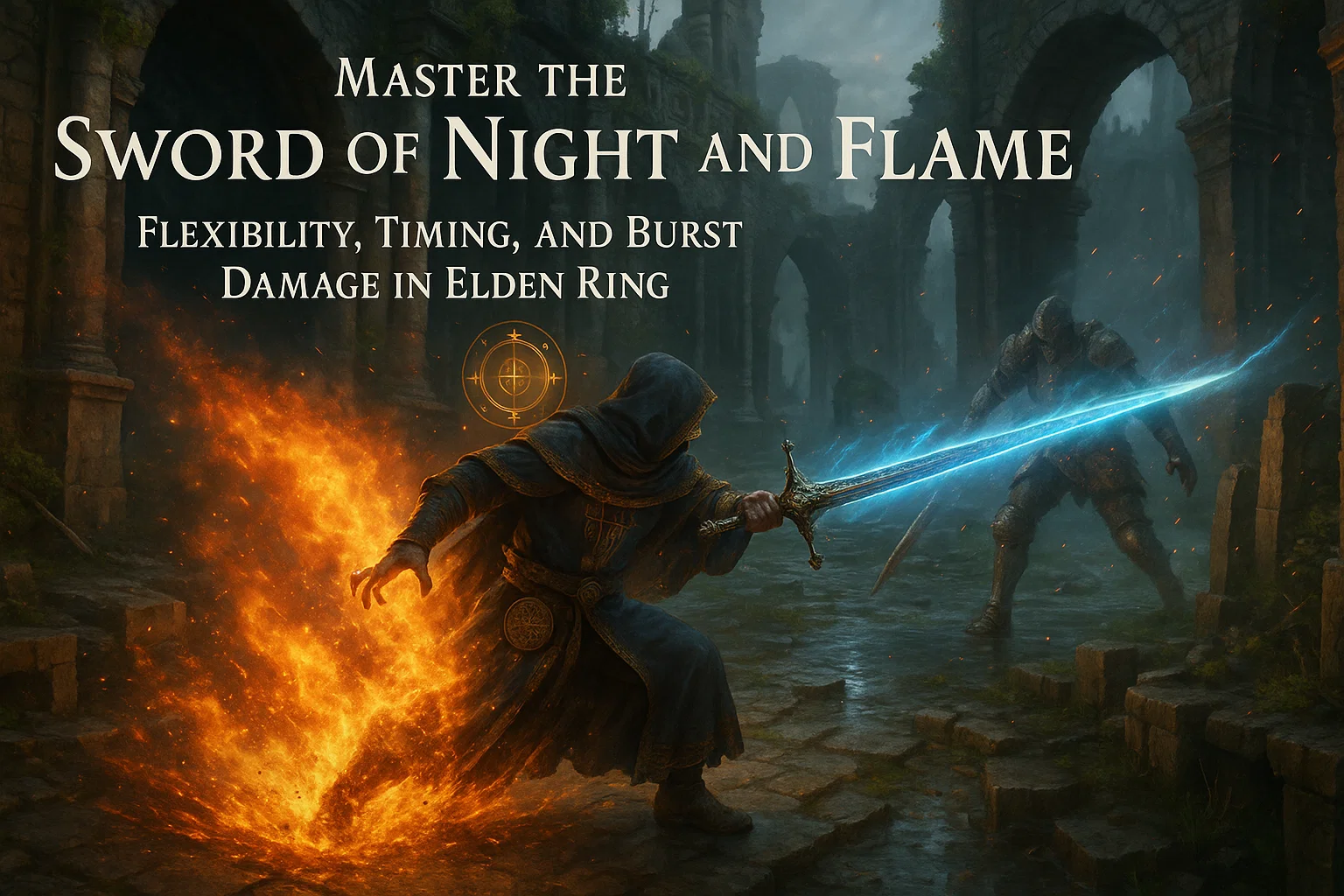
When Elden Ring first launched, the Sword of Night and Flame was everywhere. It was one of those weapons that almost every player experimented with at least once, mainly because its Ash of War felt flashy, powerful, and flexible. Over time, though, the weapon quietly faded out of the spotlight. New DLC gear arrived, new Ashes of War took over PvP, and the old favorite was mostly forgotten.
After spending time with this build again in the DLC environment, I honestly think the Sword of Night and Flame is far more relevant than most players give it credit for. With the right setup, it becomes a dangerous hybrid weapon that punishes mistakes hard, controls space well, and can still delete overly aggressive opponents.
This article breaks down why the weapon works, how the build functions, and what kind of situations it shines in, especially for invasions and small-scale PvP.
Why the Sword Still Works in Modern Elden Ring
At its core, the Sword of Night and Flame is a straight sword, and that alone gives it a strong foundation. Straight swords are reliable. They swing fast, recover quickly, and are excellent for whiff punishing. The light attacks come out quickly, while the heavy attack offers a thrust that can catch people who rely too much on rolling backward.
What really defines the weapon, though, is its unique stance-based Ash of War. From the Night-and-Flame stance, you get two very different tools. The heavy input unleashes a wide fire explosion with strong area control. The light input fires a magic beam that can hit hard but requires careful timing due to its slow startup.
Many players write off the beam because it is easy to dodge in a straight line, and that criticism is fair. However, in real fights, panic rolls, terrain, and latency often turn “easy to dodge” attacks into surprise hits. The fire attack, on the other hand, remains excellent for punishing teams that push too aggressively or stack on top of each other.
Stat Scaling and Build Direction
This weapon shines most on an Intelligence and Faith hybrid build. Both damage types scale well, and investing in both stats opens up flexibility that pure builds simply do not have. You are not locked into one damage source, which matters a lot in PvP when opponents stack specific resistances.
With high Intelligence and Faith, the weapon’s Ash of War damage jumps noticeably. At the same time, you still get access to sorceries and incantations. That means you can adapt on the fly. If an enemy is turtling behind magic resistance, fire becomes the answer. If they are stacking fire defense, magic pressure forces them to move.
From a progression standpoint, this kind of hybrid build is not cheap. You will spend a lot of time farming elden ring runes to comfortably level both stats while still maintaining decent Vigor and Endurance. That grind is real, especially for newer or younger players, but the payoff is a build that feels flexible instead of restrictive.
Talismans That Make the Difference
What really pushes this setup into dangerous territory is talisman synergy. The stance-based Ash of War gets a massive boost when you stack stance-enhancing effects.
Rellana’s Cameo plays a huge role here, amplifying stance damage in a way that feels almost made for this weapon. When combined with the Shard of Alexander, the burst damage from the fire explosion becomes extremely threatening. Against overly aggressive opponents, this often turns into a one-shot or near one-shot scenario.
Defensive talismans still matter. Extra HP and poise help you survive long enough to create space, which is essential because charging the fire attack without room usually ends badly. This is not a face-tank build. It rewards patience, spacing, and timing more than reckless pressure.
How It Performs in Real PvP Situations
Watching the build in action across multiple invasions highlights its strengths and weaknesses clearly. Against aggressive teams, the fire stance shines. Players who rush in without respecting spacing often eat massive AoE damage. In chaotic fights, this single attack can swing momentum instantly.
Against cautious or highly mobile players, things slow down. The magic beam becomes more situational, working best as a prediction tool rather than a reaction. Aiming where an enemy will roll, not where they are, is the key skill here. It takes practice, but once mastered, it adds real pressure.
The straight sword moveset carries a lot of the neutral game. Quick pokes, roll catches, and whiff punishes win fights even when you never touch the Ash of War. In several encounters, the weapon simply out-trades opponents who rely too much on flashy abilities instead of fundamentals.
One important lesson is poise management. Charging attacks without enough poise often leads to getting interrupted. If your opponent refuses to stop attacking, sometimes the correct choice is to abandon the stance entirely and finish the fight with basic sword play.
Resource Management and Smart Progression
Hybrid builds are powerful, but they are also resource-hungry. FP management becomes just as important as stamina. Spamming the Ash of War drains FP fast, and missing hurts more than with cheaper abilities.
Some players look for shortcuts when building hybrid characters. While farming naturally is always an option, others prefer external help. If you ever consider options like buy elden ring runes safe methods, the key is understanding that rushing levels does not replace learning fundamentals. Gear and stats help, but spacing, timing, and decision-making still decide most fights. Communities often mention platforms like U4GM in this context, but regardless of how you progress, skill development should always come first.
Small Tips That Make a Big Difference
One small but important detail is environmental awareness. Water, elevation, and tight corridors all affect how this weapon performs. Fire attacks behave differently in water-heavy areas, and narrow spaces make the AoE much harder to escape.
Another tip is resisting the urge to overcharge attacks. Fully charging looks tempting, but half-charged or instant releases often land more consistently. Many opponents expect a full charge and mistime their dodges as a result.
Finally, armor choice is flexible. Poise helps, but overloading yourself into heavy rolls can ruin the build’s strengths. Medium rolls with decent poise strike the best balance for most players.
The Sword of Night and Flame is far from obsolete. With the right Intelligence and Faith setup, smart talisman choices, and disciplined play, it becomes a flexible and punishing weapon that still holds its own in the DLC meta. It rewards players who understand spacing, patience, and timing, rather than pure button-mashing. For anyone willing to invest the time, this underrated sword offers both power and variety in a game where adaptability often decides victory.
Master the Game: Revenant Elden Ring: How to Unlock and Master the Spirit-Wielding Hero